
NatHERS Assessments
NatHERS star ratings and certificates for apartments, townhouses and new homes, ready for your building approval.
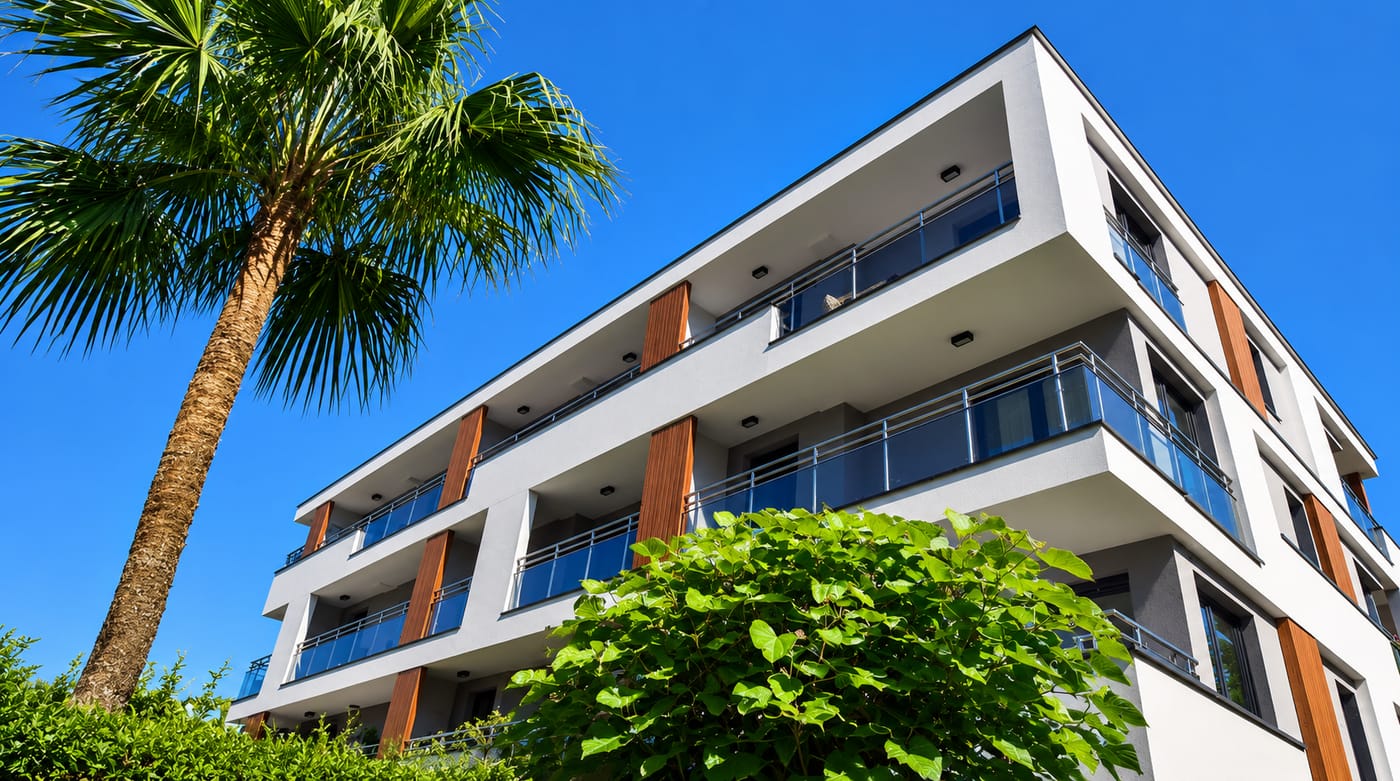
We prepare NatHERS assessments for apartment buildings, townhouses, multi-unit developments, new homes, granny flats, extensions and existing homes across all states and territories in Australia.
Each assessment gives you a NatHERS certificate that your building surveyor or certifier can rely on, along with clear advice on the most cost-effective way to reach your rating.
What is a NatHERS assessment?
A NatHERS assessment rates how much energy a home needs to stay comfortable year-round, on a scale of 0 to 10 stars, under the Nationwide House Energy Rating Scheme (NatHERS).
An accredited assessor models your design in NatHERS accredited software, using your site's climate zone, the home's orientation, and its construction, insulation, glazing, shading and ventilation.
The result is a NatHERS certificate showing the home's star rating, its heating and cooling loads and, under NCC 2022, its Whole of Home rating.
Your building surveyor or certifier uses the certificate to confirm the design meets the energy efficiency requirements of the National Construction Code (NCC) before issuing your building permit or approval.
NatHERS is 1 of 3 ways to show a home meets those requirements, and our energy efficiency report page compares all 3, while our guide What is NatHERS? explains the scheme in more depth.
While a NatHERS assessment measures the thermal performance of your building's shell, BASIX covers the whole home's sustainability.
A BASIX certificate is mandatory for NSW residential approvals, and it confirms a home meets its water, energy and thermal performance targets.
Our ESD consultancy provides both NatHERS and BASIX certificates under one roof, which keeps the compliance process simple for you.
NatHERS for apartments and multi-residential buildings
Apartment and multi-residential buildings are a focus for our team, and they're where a careful NatHERS assessment pays off most.
How apartments are rated
Under NCC 2022, every apartment in a Class 2 building is modelled and rated as its own dwelling.
- Across the building, the apartments need to average at least 7 stars.
- Every individual apartment needs at least 6 stars.
- Each apartment also meets the heating and cooling load limits for its climate zone.
- Each apartment needs a Whole of Home rating of at least 50 out of 100.
The average gives a design room to balance its apartments, so a building reaches compliance through the layouts that perform best, with targeted upgrades for the rest.
Where an apartment building earns its stars
Apartments in the middle of a building, sheltered by their neighbours above, below and beside, usually rate well on their own.
Top-floor apartments, corner apartments, apartments above a car park or shop, and west-facing apartments carry more of the building's heat gain and loss, so they're where design decisions make the biggest difference to the average.
We identify those apartments early and target the upgrades that lift them most, such as glazing on the exposed facades, insulation to the roof and to floors above unconditioned spaces, and shading on the western and northern elevations.
The building then reaches its rating with upgrades concentrated where they count, keeping the cost of compliance down.
Our Class 2 apartment project spotlight shows this approach on a multi-level building.
The whole building, with 1 consultant
Apartment buildings fall under Section J of the NCC, the apartments as well as the lobbies, corridors, car parks and any shops or offices.
Alongside the NatHERS certificates, we prepare the building's Section J compliance report, so 1 consultant covers the whole building and its compliance documents line up.
For Victorian planning applications, we prepare the sustainability reports required by councils under the Sustainable Design Assessment in the Planning Process (SDAPP) framework, including Sustainable Management Plans (SMPs) and Sustainable Design Assessments (SDAs).
Both typically incorporate a BESS assessment, which we develop using your apartments' early NatHERS results.
Beyond Victoria, we deliver ESD and ESD Initiative Reports to meet state and local sustainability triggers for development applications across NSW, QLD, WA, ACT, SA and TAS.
To ensure a seamless approvals process nationwide, we can also prepare STORM Reports and Waste Management Plans (WMPs) wherever they're required as prerequisites for planning consent.
Townhouses and multi-unit developments
Townhouses, villas and dual occupancies are rated as individual homes, so each dwelling reaches 7 stars and a Whole of Home rating of 60 on its own.
Where a development repeats a design, we rate each dwelling for its own orientation and position, which is often what decides its rating.
New homes, granny flats, extensions and existing homes
For a new home, NatHERS is the pathway that usually delivers the best performance for the building.
Granny flats and secondary dwellings are rated as homes in their own right.
Extensions and alterations can use a NatHERS assessment or the Deemed-to-Satisfy pathway, depending on the size of the work and your state's rules, and we'll recommend the simplest option for your project.
We also prepare NatHERS ratings for existing homes.
The 7-star standard and Whole of Home
Under NCC 2022, a new home generally needs a 7-star thermal performance rating, along with a Whole of Home rating of at least 60 out of 100.
The star rating measures the building itself: how well its design, insulation, glazing and shading keep it comfortable with little heating or cooling.
The Whole of Home rating adds the home's fixed appliances, such as heating and cooling, hot water, lighting and pool or spa pumps, and balances them against any solar panels and batteries.
A Whole of Home score of 100 means the home's energy use is balanced by its own solar generation over a year.
That gives you choices, because a home can reach its Whole of Home rating through efficient electric appliances, a heat pump hot water system, solar panels, or the combination that suits your budget.
Some states set their own requirements, and the state table below shows what applies where you're building.
NCC 2025
States and territories can adopt NCC 2025 from May 2026, each on its own timetable and with transition periods, and NCC 2022 remains the baseline for most projects in the near term.
We confirm which edition applies to your project when we quote, and our NCC update explains what's changing.
Going beyond 7 stars
If you'd like to go further, our Optimisation Service shows the cost and benefit of each step to 8, 9 and 10 stars.
Our 10 Star Home has won more than 15 industry awards, and our guide to 10-star homes explains what it takes.
What each state asks for
The NCC sets the national standard, and each state and territory decides how and when it applies.
State or territory
What new homes usually need
New South Wales
A BASIX certificate, which covers thermal performance, water and energy use, and a NatHERS assessment is the usual way to meet its thermal performance section.
Victoria
An energy report with the building permit application: 7 stars and a Whole of Home rating.
Queensland
The energy efficiency requirements of the Queensland Development Code, where the minimum can be as low as 4 stars for some homes, with additional concessions available, such as a 1-star credit for a covered outdoor living area with a ceiling fan in climate zones 1 and 2.
Certifiers often ask for a Form 15 compliance certificate as well.
South Australia
7 stars and a Whole of Home rating under the NCC 2022 energy efficiency provisions, with additional concessions under Ministerial Building Standard MBS 007.
Western Australia
7 stars since 1 May 2025.
Tasmania
The NCC 2019 energy efficiency provisions, which still apply to new homes in Tasmania.
Australian Capital Territory
A NatHERS rating for new homes.
What's on your NatHERS certificate
Every certificate is generated in NatHERS accredited software and arrives ready to lodge with your application.
- Your star rating out of 10, for the NatHERS climate zone your site sits in.
- Heating and cooling loads, in megajoules per square metre per year, against the load limits for your climate zone.
- Your Whole of Home rating out of 100, wherever NCC 2022 requires one.
- The building specification the rating relies on: construction, insulation, glazing performance (U-value and SHGC), shading and building sealing.
- A unique certificate number, with the software and the accredited assessor named, so your certifier can verify it.
- Stamped plans that match the certificate, which your certifier checks the design against.
For apartment buildings, you receive a certificate for each apartment and a summary for the whole building, showing the average rating and every apartment's result.
Your certificate comes inside our full energy efficiency report, with the compliance summary and any upgrade actions written against the NCC clause they relate to.
For homes in Queensland, a Form 15 compliance certificate sits at the front of your report, and for projects in New South Wales, you also receive your BASIX certificate wherever it applies.
How it works
Send us your plans.
Upload your drawings through the enquiry form, or email them to us.
Receive your quote.
We confirm the fee and the turnaround time, generally 2 to 7 business days for a home, depending on the size and complexity of the design and the number of dwellings.
We model your design.
Every dwelling is modelled for your site's climate zone and the NCC requirements for your state.
We recommend upgrades where needed.
Where a design needs a lift to reach the minimum rating for your state, we show you the most cost-effective changes to get there, so you can choose your preferred option.
You receive your preliminary results.
They arrive for your review, and once you confirm them or request minor changes, we make any adjustments before finalising.
You receive your NatHERS certificates and stamped plans, ready to submit.
What we'll need from you
- A site plan showing north and the site address
- Floor plans, elevations and sections
- For apartment buildings, plans of every level, including the car park, lobbies and any shops or offices
- A window and door schedule, with sizes and frame types
- Construction details for walls, floors and roof
- Your chosen insulation and glazing, if already decided
- Heating, cooling, hot water and lighting details, and any solar, for the Whole of Home rating
- Your council, and any planning conditions about energy efficiency
If some of these are still in progress, send what you have and we'll let you know what else we need.
What a NatHERS assessment costs
The fee depends on the size and complexity of the design, the number of dwellings, and how many different layouts they include.
A NatHERS assessment for an average 3-bedroom, single-storey home built on-site with a simple design typically starts at $310 plus GST.
Apartment buildings and townhouse developments are quoted on the number of dwellings and the number of different layouts, so an apartment building with repeated floor plans, for example, costs less per dwelling than one where every layout is different.
Our quote confirms the exact fee before any work begins.
Our fee will vary depending on:
- Size and number of storeys
- Complexity of the design
- Number of dwellings and how many different layouts they include
- Whether you'd like optimisation beyond the minimum
Why choose SUHO
- Accredited NatHERS assessments through Design Matters National, prepared for every state and territory.
- Apartments and multi-residential buildings as a focus, with our residential and commercial teams together, so the building's Section J compliance report sits with the same consultant.
- 60,000+ projects for 2,000+ clients, led by principal Jim Woolcock, with more than 25 years in the industry.
- Beyond compliance: we help homes reach 7, 8, 9 stars and beyond, with a clear view of the cost of each step.
- Recognised by the industry: members of the Green Building Council Australia, Design Matters National and prefabAUS.
Frequently asked questions
What is a NatHERS assessment?
It's an energy rating of a home's design, from 0 to 10 stars, prepared by an accredited assessor using NatHERS accredited software.
Your building surveyor or certifier uses the NatHERS certificate to confirm the design meets the NCC energy efficiency requirements.
How much does a NatHERS assessment cost?
An average 3-bedroom, single-storey home built on-site with a simple design typically starts at $310 plus GST.
Apartment buildings and townhouse developments are quoted on the number of dwellings and layouts, and your quote confirms the exact fee before any work begins.
How long does a NatHERS assessment take?
Generally 2 to 7 business days for a home, from receiving complete plans.
Apartment buildings are scheduled to suit your project, and your quote confirms the timing.
What's the difference between a NatHERS certificate and an energy efficiency report?
A NatHERS certificate is the official result of the NatHERS pathway.
"Energy efficiency report" is the broader term, and covers the NatHERS, VURB and DTS pathways.
How are apartments rated under NatHERS?
Each apartment is rated individually.
Under NCC 2022, the apartments need to average at least 7 stars across the building, with every apartment reaching at least 6 stars.
What star rating does my home need?
Most new homes need 7 stars under NCC 2022, and some states set their own requirements, such as Queensland and Tasmania.
Your building surveyor confirms the requirement, and we're happy to check it with them for you.
What is a Whole of Home rating?
It scores the energy used by a home's fixed appliances, such as heating, cooling, hot water and lighting, against any solar panels and batteries, out of 100.
New homes generally need at least 60, and apartments at least 50.
Who can issue a NatHERS certificate?
An accredited NatHERS assessor, registered with an Assessor Accrediting Organisation and using NatHERS accredited software.
Every certificate we issue names the assessor and their accreditation.
What if my design needs a lift to reach 7 stars?
We show you the most cost-effective changes to reach it, such as upgraded glazing, extra insulation or better shading, then rate the design again once you've chosen.
Do I need a NatHERS assessment in New South Wales?
New homes in NSW need a BASIX certificate, and a NatHERS assessment is the usual way to meet its thermal performance section.
We prepare both.
Can you rate an existing home?
Yes, we prepare NatHERS ratings for existing homes.
If you're planning upgrades, our Optimisation Service works from your architectural drawings to show where your home can perform better and which changes make the most difference.
Which NCC edition applies to my project?
NCC 2022 remains the baseline for most projects, while states and territories adopt NCC 2025 on their own timetables from May 2026.
We confirm the edition that applies to your project when we quote.
Ready for your NatHERS assessment?
Send us your plans and we'll confirm the fee and turnaround.
You can upload your plans with your enquiry through our enquiry form, email info@suho.com.au, or call 1300 308 525.